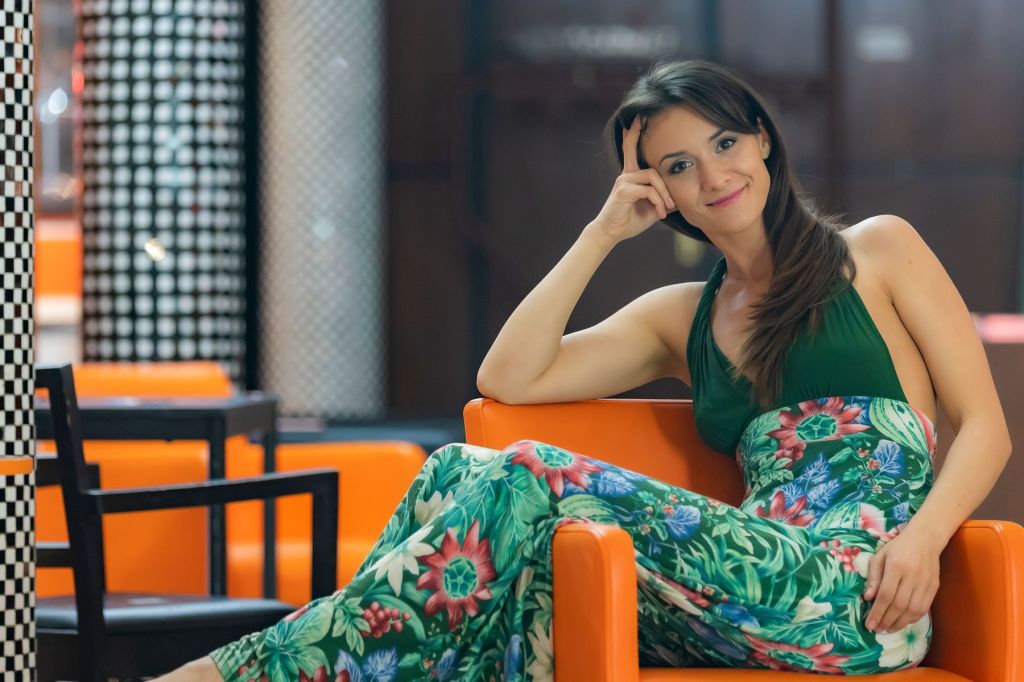
Tímea Fülöp
Fülöp Tímea, a talented 29-year-old actress, emerged from the prestigious Academy of Arts in Novi Sad.
Her theatrical journey blossomed across renowned stages, including the Dezső Kosztolányi Theater, Novi Sad Theater, National Theater of Subotica, and Átrium Theater Budapest. Notably, she received accolades like the Grand Prix for her stellar performance in Anna Karenina at the Nikšić Regional Actors’ Festival, multiple Best Actress awards in different theater festivals, the prestigious Sterija Award for Best Choreography, and more, solidifying her reputation as a remarkable actress.
Fluent in Hungarian, Serbian, English, and Spanish, Fülöp Tímea aspires to master these languages for professional on-screen and theatrical endeavors. Her passion extends beyond acting; she dreams of establishing a nurturing acting school for children, fostering creativity and emotional growth in a safe, playful environment.
My showreel
My theater acting showreel is a captivating journey through the diverse characters I’ve brought to life on stage. From dramatic monologues to hilarious comedic scenes, it showcases my versatility as an actor. Each clip is a window into my passion for storytelling, leaving the audience eager to experience the full spectrum of emotions that theater can offer.
Anna Karenina
“We are all Anna Karenina”
I have always said that we are all Anna Kareninas – women and men – but not everyone’s story ends in the same tragedy. I feel that I got to know myself better through Anna, because her character brought out qualities and feelings in me that I didn’t necessarily know before. I enjoy it very much and I am always happy when we meet on stage and hold hands, reliving moments over and over again, even if they are often black.
Movie reel
A two-minute video compilation of my best works, showing my range of acting.
“Timea Fülöp has given an exceptional, truly anthological performance that has securely placed her among the best actresses in the country. And not only that, but in her interpretation of Anna Karenina, she went from being a classical heroine fighting against society’s chains, pursuing her love, to incorporating subtle yet understandable tones of contemporary women’s rights advocacy, if I may say feminism. She managed to unite all of this in one role, with transitions that are truly emotional, artistic, and convincing, as evidenced by the audience’s reaction.”
Svetislav Jovanov
theater critic, writer, playwright, double recipient of the Sterija Award
“Fülöp Tímea played Anna Karenina excellently, very clearly, very precisely, very warmly and closely, and it seems that the director, Dejan Projkovski, and the whole ensemble did just as well, showing the agony in which Ana is above all and which involves the transition from one type of life to another, and the risk that this departure entails. It is very clear here that it is not actually the making of the decision that causes suffering.”
Nataša Gvozdenović
journalist, theater critic
“If you say ‘a star is born’ in art, it’s almost like in astronomy. There are many theories about it, but there is still a mystery surrounding it, the mystery is how it happens. Especially why. Everyone agrees on only one. The phenomenon is breathtaking and dazzling. If not in the night sky, it is visible to the naked eye on the stage in deep space. Tímea Fülöp is the actress in whom we can now definitely see this phenomenon.”
Igor Burić
journalist, theatre critic
“Timi Fülöp, who portrays Grace, rises not only on account of the suffering victim’s right but also because through her performance, we experience the complete transformation of the character she has shaped. From the defenseless and vulnerable woman to the open-hearted friend, the determined fugitive, and the disillusioned individual, we witness a full spectrum of character changes. In her final, spine-chilling monologue, Fülöp’s words freeze the air, and the chilling melodies of winter in Dogville turn the town into a timeless, icy tableau.”
Virág Gyurkovics
journalist
“Led by the brilliantly self-aware Timea Fülöp, the performers, technically extremely disciplined, stylistically confidently, and imaginatively in terms of genre, shaped before our eyes a frightening yet strangely liberating fresco of the (inevitable?) future. Equally confidently, on the musical-verbal plane, they anticipated the reward/punishment awaiting us at the end of the dizzying orgy of progress.”
Svetislav Jovanov
dramaturg and theorist
 Tímea Fülöp